
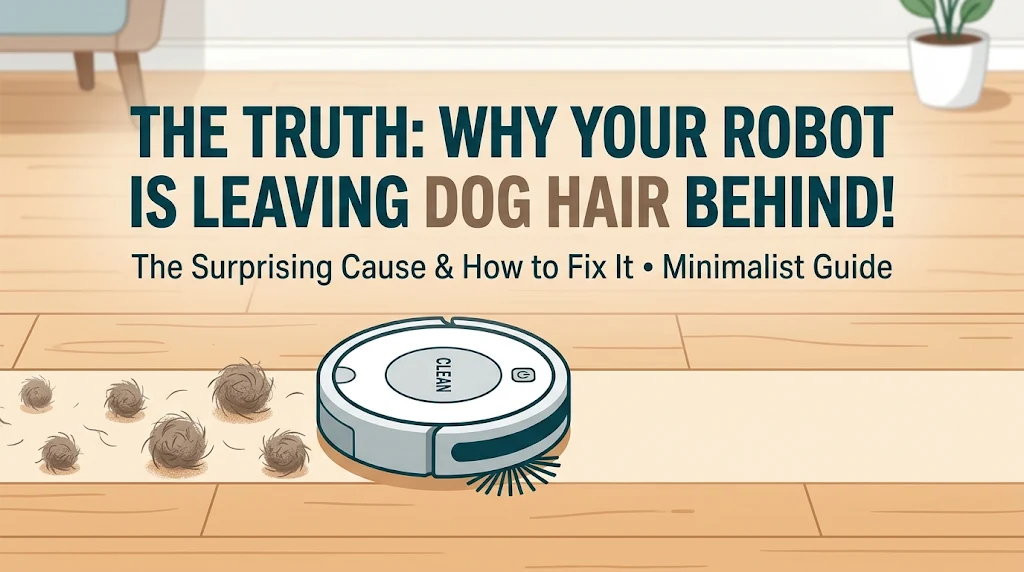
You invested in a robot vacuum to liberate yourself from daily pet hair chores. You expected pristine floors, but instead, you walk into the living room only to find a bizarre new phenomenon: eerie, wind-blown tumbleweeds of dog hair rolling across your hardwood floor or trapped mid-stride in your carpet fibers.
Instead of eliminating pet fur, your automated helper seems to be herding it into erratic piles, leaving you with more work than when you started.
If you are dealing with this frustrating cleaning failure, you are far from alone. Pet hair is notoriously difficult to capture due to its lightweight structure, electrostatic charge, and tendency to weave itself into dense mats. When a robot vacuum leaves behind fur tumbleweeds, it is signaling a breakdown in one of three areas: mechanical intake, airflow suction, or brush roll efficiency.
In this comprehensive troubleshooting guide, we will break down why this happens, how to diagnose the root cause, and the step-by-step measures you can take to transform your robot vacuum back into a high-performance pet hair-fighting machine.
1. The Anatomy of Pet Hair Failure: Why Tumbleweeds Form
To solve the problem, we first need to understand the physics of how pet hair interacts with robotic cleaning systems. Traditional upright vacuums rely on massive motor wattage and direct downward pressure to pull hair deep from fibers. Robot vacuums, by contrast, operate on a much tighter power budget, relying on a delicate balance of brush agitation and aerodynamic lift.
When that balance is disrupted, several mechanical failures occur:
Roller Brush Jamming and Tangling
Long dog hair wraps around the cylindrical brush roll within seconds. Once a thick layer of fur coats the brush, the bristles or rubber blades are lifted away from the floor surface. Instead of sweeping and flicking hair into the suction inlet, the brush roll acts like a slick cylinder, sliding right over the fur or compressing it into a dense clump (the dreaded “tumbleweed”).
Suction Loss and Airflow Bottlenecks
Pet hair is bulky. Even if your vacuum motor is pulling strong air, a slight restriction in the dustbin filter, a clogged intake port, or a full dirt compartment creates an aerodynamic bottleneck. When suction drops below the critical threshold required to lift weight-to-surface ratios, hair is pushed forward by the front bumper rather than inhaled.
Static Electricity and Carpet Fiber Grip
Synthetic carpets generate static electricity when brushed against, which acts like a magnet for pet hair. If your vacuum lacks adequate anti-static treatment or if the brush roll cannot physically reach deep enough into high-pile carpets, the static bond between the fur and the carpet fibers overpowers the vacuum’s extraction force.
Pro Tip: If your robot vacuum leaves hair clumps exclusively on carpets while performing adequately on hard floors, your issue is likely brush pile penetration or static grip rather than a motor suction failure.
2. Step-by-Step Diagnostic & Troubleshooting Guide
Fixing the tumbleweed problem requires a systematic approach to cleaning, maintaining, and calibrating your device. Work through these four critical troubleshooting steps:
Step 1: Inspect and Deep-Clean the Multi-Surface Brush Roll
The brush roll is the frontline worker in pet hair cleanup. If it is compromised, the entire system fails.
Remove the brush guard: Flip your robot vacuum over and release the latch holding the brush roll cover in place.
Cut away tangled hair: Use a seam ripper or a specialized pet hair cleaning tool (often included with modern vacuums) to slice through tightly wound hair parallel to the brush channel. Never pull hair forcibly, as this can damage the bearings.
Check the end caps: Remove the small rubber or plastic end caps on both sides of the brush roll. Hair frequently sneaks underneath these caps, binding the rotation and preventing the motor from turning the brush at full RPM.
Step 2: Clear the Intake Port and Dustbin Path
A hidden clog in the throat of the vacuum can instantly neutralize suction power.
Inspect the suction inlet: Look inside the opening where the brush roll meets the dustbin. Long golden retriever or German shepherd hair easily catches on minor plastic burrs or sensor windows, creating a structural dam.
Empty before full: Pet hair is voluminous and creates pockets of trapped air. If your vacuum’s dustbin is 60% full of loose fur, airflow is severely restricted. For heavy shedders, you may need to empty the bin mid-cycle or invest in an auto-empty docking station.
Step 3: Check and Wash Filters (HEPA & Foam)
Microscopic pet dander and fine undercoat fur quickly coat vacuum filters, sealing off airflow like a sheet of plywood.
Tap out loose debris: Tap your pleated HEPA filter gently against a hard trash can surface to dislodge fine dander.
Wash washable components: If your manufacturer guidelines permit, rinse the foam and mesh filters under lukewarm water. Crucial Rule: Ensure the filter is 100% bone dry before reinstalling it. Putting a damp filter back into a vacuum creates a mud-like cake of dust and hair that completely ruins airflow and can burn out the motor.
Step 4: Assess Wheel Traction and Navigation Sensors
Sometimes, tumbleweeds form not because the vacuum fails to suck up hair, but because the robot is slipping or looping incorrectly over the same spot.
Clean cliff and wall sensors: Wipe down infrared sensors with a microfiber cloth. Smudged sensors can cause erratic movement, making the vacuum push debris rather than drive over it cleanly.
Inspect drive wheels: Check the rubber treads on the main drive wheels. If they are packed with compacted pet hair and floor grime, the wheels lose traction on hard flooring, causing the vacuum to stutter or stall while pushing clumps of hair ahead of its chassis.
3. Optimizing Your Home Environment for Pet Hair Cleanup
Hardware maintenance is only half the battle. How you configure your cleaning routine and home environment dictates how successfully your robot handles pet hair.
Managing High-Traffic Shedding Zones
Pets tend to lounge in specific areas—near sunny doorways, favorite dog beds, or living room couches.
Use your robot vacuum’s companion app to set up No-Go Zones around bulky pet bedding where loose fabric and massive hair concentrations can overwhelm the intake.
Instead, create customized Cleaning Schedules that target high-shedding zones twice a day rather than relying on a single daily run.
Scheduling Frequency vs. Daily Maintenance
If you share your home with heavy-shedding breeds (like Huskies, Labs, or Golden Retrievers), running your robot vacuum three times a week is a recipe for tumbleweeds.
The Rule of Frequency: High-shedding households require daily or twice-daily cleaning cycles. Frequent cleaning prevents hair from accumulating into dense mats that challenge robotic intake limits.
Pre-Cleaning Prep Work
Robotic vacuums are marvels of engineering, but they are not industrial heavy-duty shop vacs.
Pick up rogue dog toys, thick heavy blankets trailing on the floor, and stray cords. When a robot vacuum encounters a barrier, it stalls, spins in place, and sweeps ambient pet hair into unsightly surface piles.
4. Common Pitfalls and Mistakes to Avoid
Even well-intentioned pet owners make errors that exacerbate the tumbleweed problem. Avoid these common traps:
Mistake 1: Ignoring Maintenance Intervals. Assuming an automated vacuum is entirely maintenance-free. Correction: Dedicate 5 minutes every week to clean the brush roll and sensors. Neglecting this leads to rapid performance degradation.
Mistake 2: Using Bristle Brushes for Long-Hair Breeds. Traditional stiff bristle brushes act like velcro for long human and pet hair. Correction: Upgrade to an all-rubber fin brush or anti-tangle silicone roller if your model supports aftermarket upgrades. Rubber blades fling hair directly into the suction path without allowing it to wrap tightly.
Mistake 3: Neglecting Firmware and App Updates. Manufacturers frequently release algorithmic updates that optimize motor speed, navigation efficiency, and suction curves for pet-heavy environments. Always keep your app updated.
5. Frequently Asked Questions (FAQ)
Why does my robot vacuum push pet hair into a pile instead of sucking it up?
This typically happens when the intake port or filter is clogged, reducing suction power below the threshold needed to lift lightweight fur. It can also occur if the brush roll is completely bound with wound hair, preventing it from flicking debris into the bin.
Are rubber brush rolls better for pet hair than bristle brushes?
Yes. All-rubber or silicone finned brush rolls are vastly superior for pet hair because hair slides off rubber surfaces easily instead of weaving tightly around bristles, drastically reducing maintenance frequency and tangling.
How often should I clean my robot vacuum’s brush roll if I have heavy-shedding dogs?
In households with heavy-shedding pets, you should inspect and clear hair from the brush roll every 3 to 5 cleaning cycles. Letting hair accumulate longer will cause the bearings to bind and reduce cleaning efficiency.
Can I use carpet powder or baking soda to freshen pet odors before vacuuming?
It is strongly discouraged. Fine scented powders and baking soda particles bypass cheap filters, coat the internal motor housing, and clump together when exposed to humidity, creating a cement-like paste that destroys vacuum suction permanently.
Conclusion & Call to Action
Dealing with robot vacuums that leave behind tumbleweeds of dog hair can test the patience of any pet owner. However, by understanding how hair interacts with your machine, maintaining your brush rolls and filters religiously, and optimizing your cleaning schedules, you can reclaim spotless floors with minimal manual effort.
Ready to banish pet hair tumbleweeds for good? Take 10 minutes right now to flip your robot vacuum over, snip away the tangled hair on the brush roll, rinse out the filter, and schedule a daily cleaning routine to keep your floors pristine year-round!
